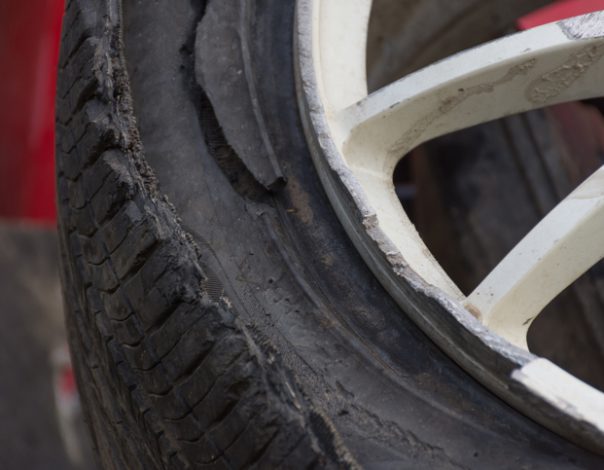
Curb Rash vs. Structural Damage: When to Replace a Scraped Sidewall
Curb rash is almost always cosmetic, but a scraped sidewall isn’t automatically safe just because it looks minor. Knowing the difference between surface damage and structural damage can keep a curb scrape from turning into a blowout down the road.
What Curb Rash Actually Is
Curb rash refers to scuffing, scratching, or gouging on a wheel or tire sidewall caused by contact with a curb, usually while parking or turning too tightly. On the wheel itself, it’s typically cosmetic—scraped paint or clear coat. On the tire, though, the sidewall is a different story, since it’s the part of the tire responsible for holding air pressure and absorbing impact.
Cosmetic Damage vs. Structural Damage
The sidewall doesn’t have the thick tread layer that protects the rest of the tire, which means even a moderate curb strike can damage the internal cords and belts that give a tire its strength. Cosmetic damage stays on the surface: light scuffing, scratched rubber, or discoloration with no deformation. Structural damage goes deeper, compromising the layers underneath even when the surface looks mostly intact.
Warning Signs You Need a New Tire, Not a Repair
A tire with any of the following should be replaced, not patched:
- A visible bulge or bubble anywhere on the sidewall
- Cuts, gouges, or cracks deep enough to expose the internal cords
- A soft spot you can feel when pressing on the sidewall
- Persistent air loss or a tire that needs frequent refilling after the scrape
If you see any of these signs, don’t drive on the tire longer than necessary to get it inspected—sidewall damage can fail suddenly and without further warning.
Can a Scraped Sidewall Be Repaired?
Generally, no. Unlike a puncture in the tread, which can often be safely patched or plugged, most tire manufacturers and reputable shops consider sidewall damage unrepairable. The sidewall flexes constantly as the tire rolls, and a repair simply can’t hold up to that stress the way the tread area can. If a shop offers to patch a sidewall scrape, that’s a signal to get a second opinion.
How to Avoid Curb Rash Going Forward
A little extra care while parking goes a long way toward protecting your tires and wheels:
- Give yourself more room when parallel parking or navigating tight turns
- Use a backup camera or parking sensors if your vehicle has them
- Slow down over speed bumps, potholes, and uneven pavement, since sidewall damage isn’t always caused by curbs alone
- Have your tires inspected after any hard impact, even if nothing looks obviously wrong
Peace of Mind When It Happens Anyway
Curbs happen to even the most careful drivers. That’s exactly why GT Radial backs every tire with a Road Hazard Warranty, so a cut, tear, or impact break doesn’t have to mean an unplanned expense. If you’ve scraped a sidewall and aren’t sure whether it’s cosmetic or structural, don’t guess. Find a GT Radial dealer near you for a professional inspection.