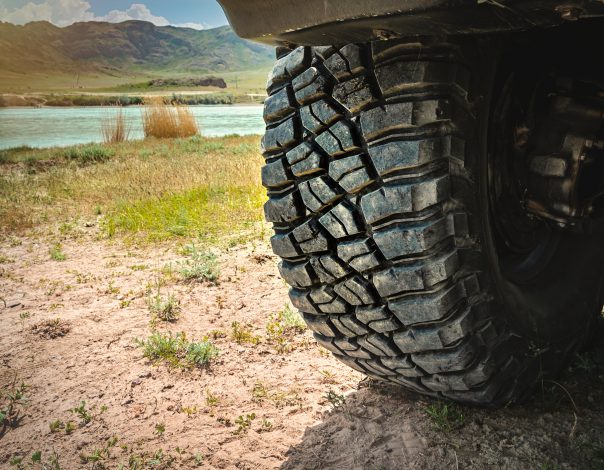
Air-Down Traction: How PSI Affects Off-Road Grip
If you’ve spent any time around off-roaders, you’ve probably heard someone say “air down before you head out.” It sounds simple, but the science behind why lower tire pressure improves off-road grip is worth understanding, especially if you’re trying to get the most out of your GT Radial tires on trails, sand, mud, or snow.
What “Airing Down” Actually Does
Every tire has a contact patch, the small area of rubber that actually touches the ground at any given moment. On pavement, a firm, high-pressure tire keeps that patch compact and predictable, which is exactly what you want for fuel efficiency and stable handling at speed.
Off-road, the calculus changes. Lowering your tire’s PSI lets the sidewalls and tread flex more, so the tire “wrap around” rocks, roots, and ruts instead of bouncing over them. That flex increases the contact patch, spreading your vehicle’s weight over more surface area. More rubber on the ground generally means more traction, especially on loose or uneven terrain.
Matching PSI to the Terrain
There’s no single “off-road pressure” that works everywhere — the right number depends on what’s under your tires:
- Sand: Softer, wider footprints help you float on top instead of digging in. Many off-roaders drop tire pressure significantly for dunes, since flotation matters more than sidewall support here.
- Mud: A slightly larger footprint combined with tread flex helps the tire self-clean and bite into softer ground, though you don’t want pressure so low that the tire folds under torque.
- Rock crawling: Lower pressure lets the tread conform to irregular rock surfaces, increasing the number of tread blocks in contact with the surface at any time.
- Snow and ice: A larger, flatter contact patch can help distribute weight and improve bite, though snow conditions vary enough that drivers often adjust incrementally.
As a general guideline, many off-road drivers start by reducing pressure from their normal on-road PSI and adjusting from there based on how the vehicle feels and how the tire sidewall is flexing. Your owner’s manual and tire placard are the best starting reference points, and a portable air compressor is essential gear if you plan to air down and back up regularly.
The Trade-Offs to Know
Airing down isn’t free of downsides, which is why it’s a “for off-road use” technique rather than an everyday setting:
- Increased sidewall flex improves grip but also raises the risk of the tire slipping off the rim (a “bead unseat”) at very low pressures, particularly during hard cornering or side-loading.
- Reduced load capacity means a tire that’s aired down too far may not adequately support your vehicle’s weight, leading to excessive sidewall wear or a pinch flat over a sharp rock or rut.
- Handling changes on transitions between surfaces — a tire optimized for loose dirt will feel vague and sluggish if you get back on pavement without re-inflating.
That last point matters most: always air back up to your vehicle’s recommended on-road PSI before returning to pavement or highway speeds. Underinflated tires on pavement generate excess heat, wear unevenly, and hurt fuel economy and handling.
Why Tire Design Still Matters
PSI adjustments work with your tires, not instead of them. A tire engineered with reinforced sidewalls, an aggressive tread pattern, and durable compounds designed for off-road use will respond much better to airing down than a standard all-season tire, and it will hold up better to the extra flexing involved. That’s part of why GT Radial’s off-road-oriented lines are built with sidewall constructions and tread designs meant to handle the demands of varied terrain, from light trail use to more serious off-roading.
The Bottom Line
Air pressure is one of the simplest, most effective (and free) adjustments you can make to improve off-road traction. Understanding how PSI affects your contact patch and matching that pressure to the terrain ahead can be the difference between getting stuck and cruising through. Just remember: what helps you off-road can hurt you on the highway, so always reset your pressure before you’re back on pavement.
Not sure what tire pressure works best for your GT Radial tires and vehicle? Talk to your local GT Radial dealer; they can help you dial in the right setup for your specific truck, SUV, or off-road build.