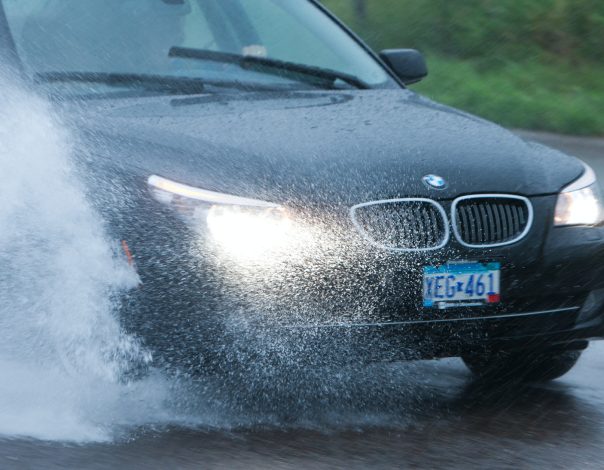
How Sipes Prevent Rain Hydroplaning
If you’ve ever felt your steering go strangely light on a rain-soaked highway, you’ve experienced the early stages of hydroplaning, one of the more unsettling things that can happen behind the wheel. Tire engineers have spent decades designing features to fight it, and one of the most important is something most drivers have never heard of: the sipe.
What Hydroplaning Actually Is
Hydroplaning happens when a layer of water builds up between your tire and the road faster than the tire can displace it. Instead of rubber gripping asphalt, your tire skims on a thin film of water; once that happens, steering, braking, and acceleration become unreliable until the tire regains contact with the road surface.
Speed, water depth, tire tread depth, and tire design all affect how likely hydroplaning is at any given moment. Tires have to manage water in two ways: channeling large volumes away through the main grooves, and gripping the residual film of water still left on the road surface. That second job is where sipes come in.
What Sipes Actually Are
Sipes are the small, thin slits cut into a tire’s tread blocks, distinct from the larger grooves that make up the tread pattern itself. Grooves are wide channels designed to move bulk water out from under the tire, while sipes are fine, often zigzag-shaped cuts that do something more subtle: they create additional biting edges across the tread surface.
Those extra edges matter because they:
- Increase the number of edges that can grip the road surface, especially on wet or slick surfaces
- Allow tread blocks to flex slightly, which helps squeeze out the thin remaining film of water right at the point of contact
- Improve traction on wet, icy, or otherwise low-friction surfaces without sacrificing the tread block’s overall stability
Think of grooves as doing the heavy lifting, evacuating standing water in bulk, while sipes handle the fine-grained work of maintaining grip once most of that water has been cleared.
Why Siping Design Is a Balancing Act
More sipes generally mean more wet-weather grip, but tire engineers have to balance that against tread block stability. Cut too many sipes, or make them too deep or poorly shaped, and the tread blocks can become too flexible, leading to reduced steering precision, faster wear, or a noisier ride. That’s why siping patterns are carefully engineered; the shape, depth, angle, and density of sipes are all tuned to the tire’s intended use, whether that’s a touring all-season tire or a dedicated wet-weather design.
Many GT Radial tire lines incorporate full-depth siping, meaning the sipes remain functional as the tread wears down rather than disappearing after the first few thousand miles, which matters because a tire’s wet-weather performance shouldn’t fall off a cliff halfway through its usable life.
What Else Affects Hydroplaning Resistance
Sipes are one piece of the puzzle, but a few other factors matter just as much:
- Tread depth: Worn tires have less capacity to channel water, which is why most experts recommend replacing tires once tread depth gets low, well before they’re legally bald.
- Tire pressure: Under-inflated tires distort the contact patch and can reduce a tire’s ability to manage water effectively.
- Speed: Hydroplaning risk increases sharply as speed increases, since there’s less time for water to be displaced before the next section of tread arrives.
- Tread pattern: Directional and asymmetric patterns are often designed with water evacuation specifically in mind, working alongside sipes rather than instead of them.
The Bottom Line
Those tiny slits across your tread aren’t a cosmetic detail; they’re doing real work every time your tires meet a wet road. Combined with a well-designed tread pattern and proper maintenance, siping is a key reason modern tires handle rain so much better than tires did a generation ago. If wet-weather confidence is a priority for you, ask your GT Radial dealer which tire lines in your size offer the siping and tread design best suited to the conditions you actually drive in.