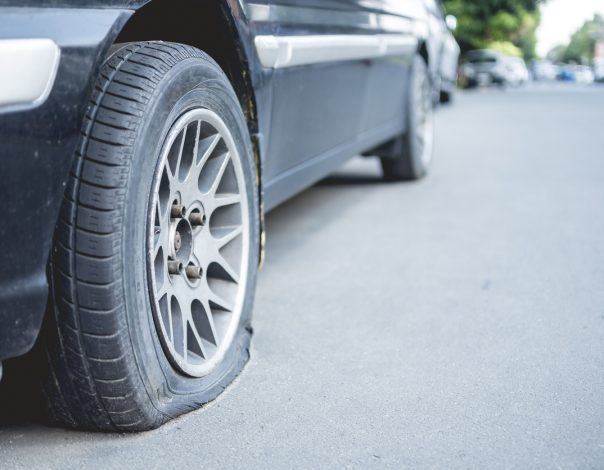
How Summer Heat Affects Your Tires: The Science of High-PSI Blowouts
Summer heat doesn’t just make the asphalt hot to the touch, it changes the actual air pressure inside your tires, and that shift is behind a lot of preventable blowouts every year. Understanding the science makes it easy to stay ahead of it.
Why Heat Increases Tire Pressure
Air expands when it heats up, and a tire is a sealed container, so that expansion has nowhere to go but up in pressure. As a general rule of thumb, tire pressure rises and falls by about 1 PSI for every 10-degree Fahrenheit change in temperature. That means a tire set to 32 PSI on a 60-degree morning could read several PSI higher by the time asphalt temperatures climb past 120 degrees on a summer afternoon. Add in the friction heat generated from highway speeds and heavy loads, and the internal pressure climbs even further.
What Happens Inside an Overinflated, Overheated Tire
An overinflated tire has less flex in its sidewall, which means less give when it hits a pothole, a curb, or road debris at speed. Combine that stiffness with heat-softened rubber compounds, and you get the conditions for a sudden tread separation or blowout, especially on tires that are already aging or under-maintained. According to the National Highway Traffic Safety Administration, tire failure causes an estimated 11,000 crashes in the U.S. every year, and hot weather significantly raises that risk.
Warning Signs Before a Blowout
Most blowouts don’t happen without warning; the signs are just easy to miss. Watch for:
- A tire that feels or sounds different at highway speed (thumping, vibration, or a new hum)
- Visible bulges or bubbles on the sidewall
- Uneven or unusually fast tread wear on one section of the tire
- A tire pressure monitoring system (TPMS) alert, even if the tire “looks fine”
How to Check and Manage PSI in Hot Weather
Always check pressure when tires are cold, meaning the vehicle hasn’t been driven for at least three hours, or has gone less than a mile. Checking a hot tire will give you an artificially high reading and lead you to underinflate it once it cools. Use the PSI number listed on your driver’s door jamb sticker, not the number printed on the tire’s sidewall, since that’s the tire’s maximum rating rather than the manufacturer’s recommendation. NHTSA recommends checking tire pressure at least once a month, and more often during long summer road trips when tires are under extra load for extended periods.
When to Have Your Tires Inspected
If you notice any of the warning signs above, or if your tires are more than five years old regardless of tread depth, it’s time for a professional inspection. Heat accelerates the aging of the rubber compounds inside a tire even when tread looks fine on the surface, so age matters as much as wear.
GT Radial tires are engineered and manufactured with rigorous quality standards, and every tire we sell is backed by our Road Hazard Warranty and 24-hour roadside assistance, so if summer heat catches you off guard, you’re covered. Find a GT Radial dealer near you for a pressure check and inspection before your next road trip.